Enzyme chemistry at the bacterial cell surface.
Our work centers on the molecular mechanisms that generate, transfer, and remodel unusual carbohydrate structures in bacterial glycoconjugates.
Unusual sugar biosynthesis and glycan transfer
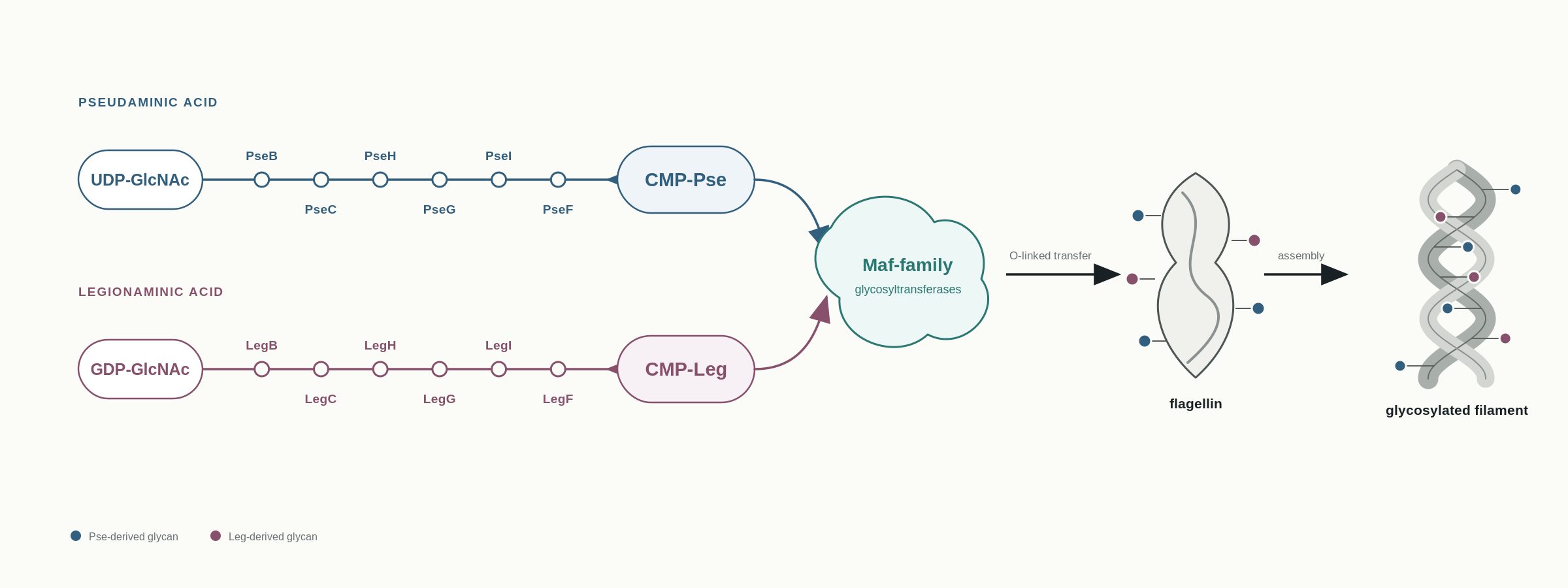
Bacteria build structurally unusual monosaccharides and attach them to flagellar proteins through dedicated biosynthetic and glycosylation pathways. We are interested in the enzyme chemistry that controls these pathways and the molecular recognition events that connect sugar biosynthesis to protein glycosylation.
Assembly and chemical modification of bacterial surface glycans
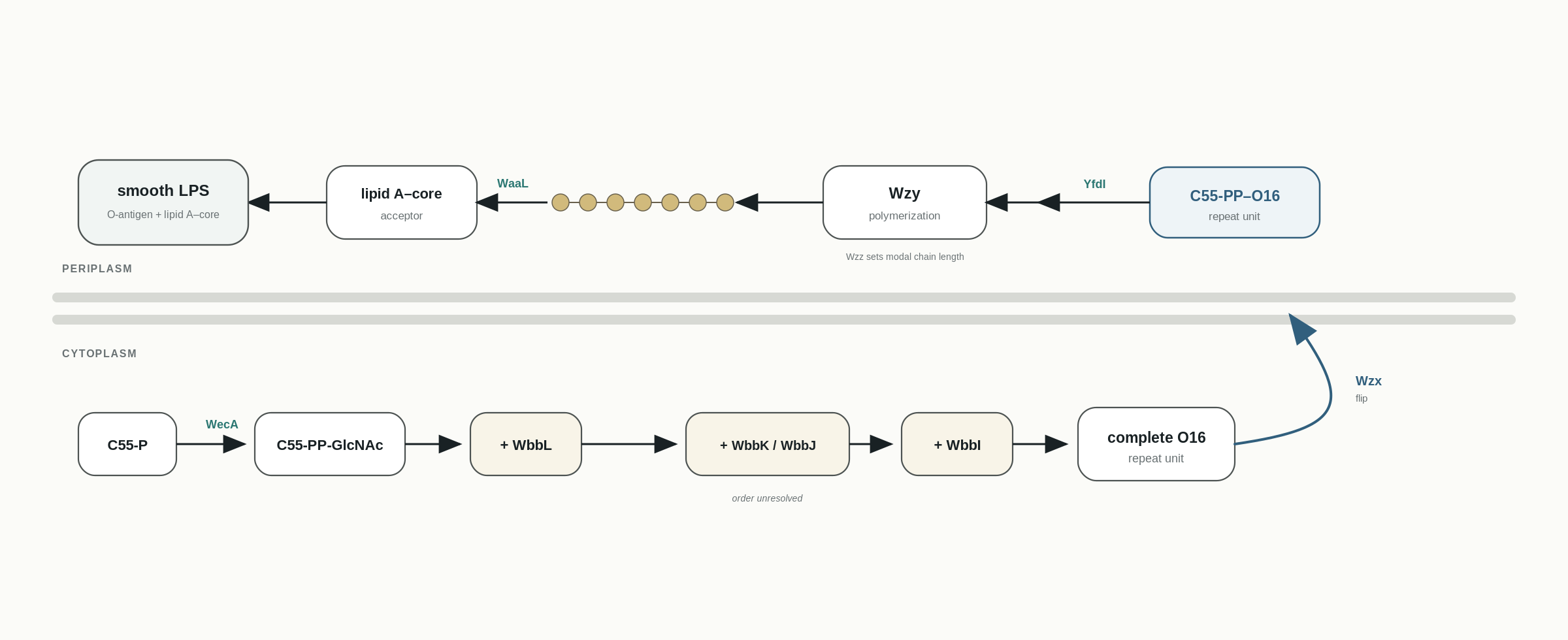
Complex bacterial glycoconjugates are assembled through multienzyme pathways that coordinate precursor synthesis, membrane-associated assembly, transport, polymerization, ligation, and chemical modification. We use these pathways as a framework for asking precise mechanistic questions about enzyme specificity and reaction chemistry.
How enzyme families acquire new donor and acceptor specificities
Closely related enzymes can perform chemically similar reactions while recognizing very different substrates. Comparative enzymology and structural biology provide a route to understanding how sequence and structure encode this functional divergence.